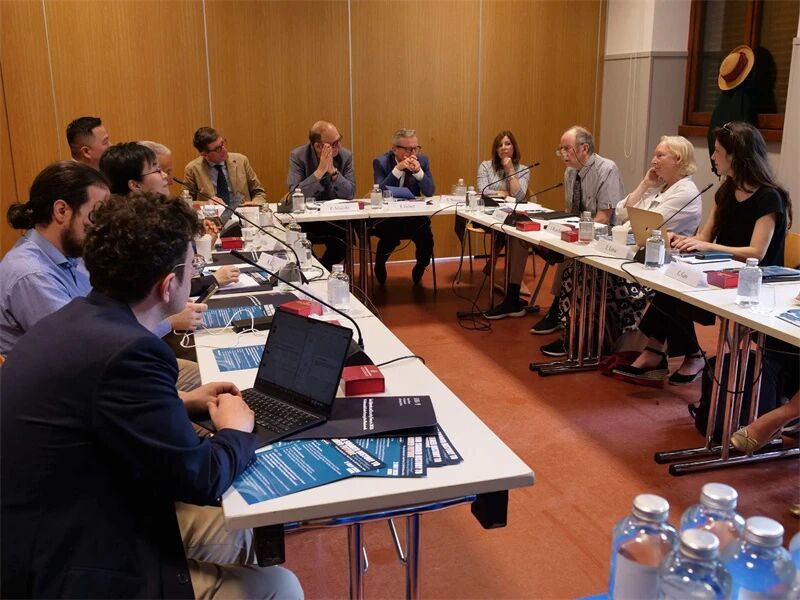


A series of academic events under the theme “From Shared History to Shared Future: Cross-Cultural Dialogue in EU-China Relations” were successfully concluded in Rome, Italy. The events were hosted by the renowned European publishing group De Gruyter Brill, and co-organized by the School of Public Affairs and the French Institute of Zhejiang University, together with the Center for Civilizational Exchange and Mutual Learning of Xiamen University, and the Center for International and Strategic Studies of Luiss University in Italy. As a core co-organizer, Zhejiang University played a significant role in event planning, academic coordination, and platform building, demonstrating its active commitment to promoting Sino-European civilizational mutual learning and area studies.
During the events, De Gruyter Brill officially launched the inaugural issue of its new journal Cross-Cultural Dialogue – a special commemorative issue marking the 50th anniversary of the establishment of diplomatic relations between China and the EU – and introduced a new book series on the “Maritime Silk Road and Civilizational Exchange.” The publisher also announced the establishment of the “Sino-European Research Community for Civilizational Mutual Learning.” This community brings together multiple universities, research institutions, and independent scholars from both China and Europe, aiming to build a long-term and stable mechanism for academic cooperation covering joint research, publications, conferences, and personnel exchanges. As one of the key founding members of this community, Zhejiang University will be deeply involved in its future development, contributing ZJU’s wisdom to the sharing of academic resources and intellectual dialogue between China and Europe.
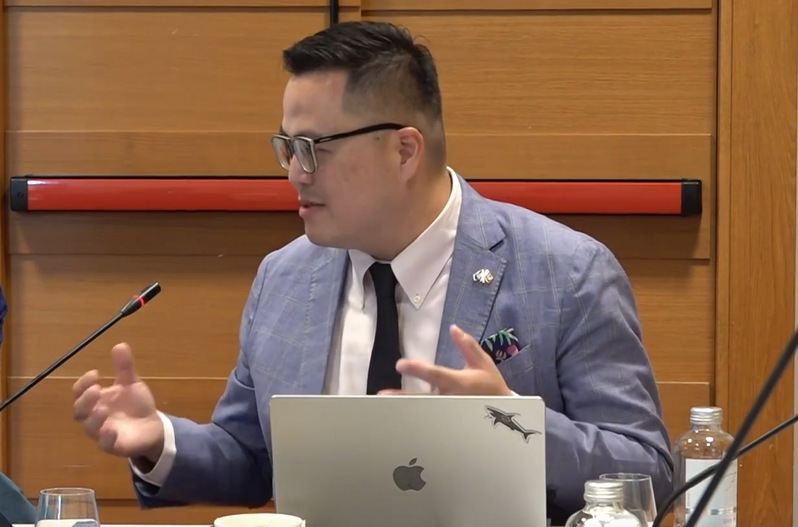
At the opening ceremony, Professor Liu Yue, editor-in-chief of Cross-Cultural Dialogue and professor at Xiamen University, introduced the journal’s open academic vision. Professor Shen Wei, Qiu Shi Chair Professor and Qingshan Young Scholar at Zhejiang University, who served as the guest editor-in-chief of the inaugural issue, emphasized in his address that choosing Rome – a historic city where different civilizations have long intersected – carried special symbolic significance. He noted that Zhejiang University has always attached great importance to deep cooperation with European academic circles. He added that this event was a concrete outcome of the practical collaboration following the signing of an institutional cooperation memorandum between ZJU Party Secretary Ren Shaobo and Luiss University President Paolo Boccardelli during Secretary Ren’s visit to Luiss last year. Through sustained and mutually beneficial academic programs, he expressed hope to enhance mutual understanding between China and Europe regarding historical perceptions, development models, and future visions, thereby injecting solid academic momentum into bilateral relations.
Professor Li Jiya, Rector of Ca’ Foscari University of Venice, delivered a video message, expressing her hope that Cross-Cultural Dialogue and the “Sino-European Research Community for Civilizational Mutual Learning” would serve as bridges to deepen youth exchanges and cultural mutual learning between Europe and China. In subsequent keynote speeches, former UN Under-Secretary-General Pino Arlacchi pointed out that dialogue among civilizations is more conducive to understanding contemporary China than ideological confrontation, and that China’s development experience offers an important reference for Europe. Thomas Geiser, Member of the European Parliament and former Mayor of Düsseldorf, stressed that China and Europe share extensive common interests on global issues such as trade, climate, and technology, and should uphold open dialogue and cooperation.
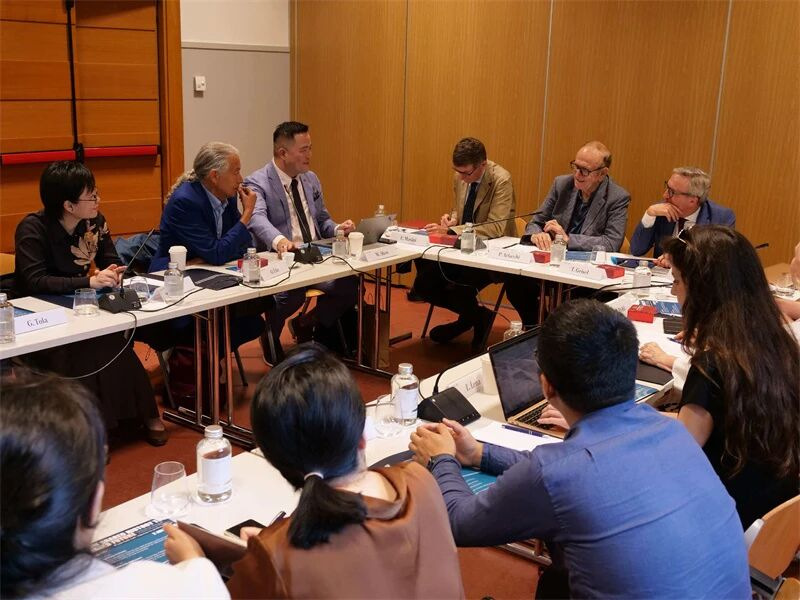
During the roundtable discussions, scholars and think-tank experts from Italy, Germany, France, China, and other countries agreed that the Silk Road was not only a route for trade but also a bond for civilizational mutual learning. Participants called for strengthening historical research and academic cooperation to address current international challenges. Representatives from Zhejiang University’s School of Public Affairs and French Institute actively participated in the discussions, sharing the university’s latest research achievements in area studies and global governance, and reaffirming their commitment to leveraging disciplinary strengths to advance the building of a Sino-European academic community.

This Rome event is another concrete step in Zhejiang University’s ongoing “Global Open Development Strategy” and a key activity under its “European Year of Global Cooperation”. The conference was supported by ZJU’s “Double First-Class” High-End Think Tank Development Fund, saw participation from the Chinese Embassy in Italy, and received media coverage from Xinhua News Agency, People’s Daily Online, China Daily, CGTN, and other outlets. Looking ahead, Zhejiang University will continue to rely on platforms such as the “Sino-European Research Community for Civilizational Mutual Learning” to work hand in hand with European partners, conduct high-level joint research, nurture globally minded young talents, and provide academic support and cultural impetus for the long-term healthy development of China-EU relations.